Table of Contents
Special exhibition
Intro
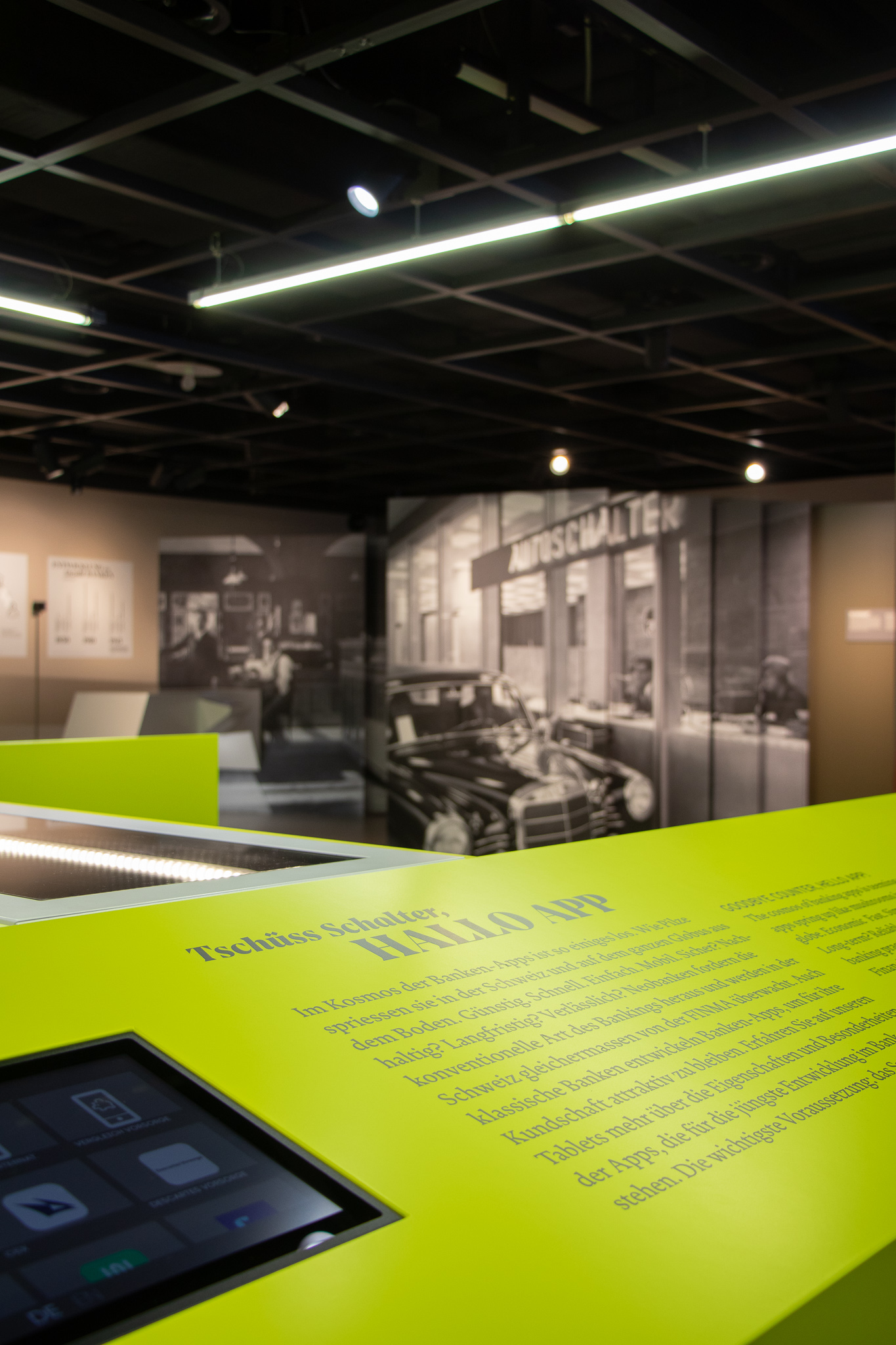
Over the past 20 years, the face of Swiss banks has changed significantly. Where once the personal contact in the branch office used to be a priority, banking has now arrived on the smartphone.
Which leads to several questions: How do we pay, save and invest - today and in the future? Which institutions do we trust?
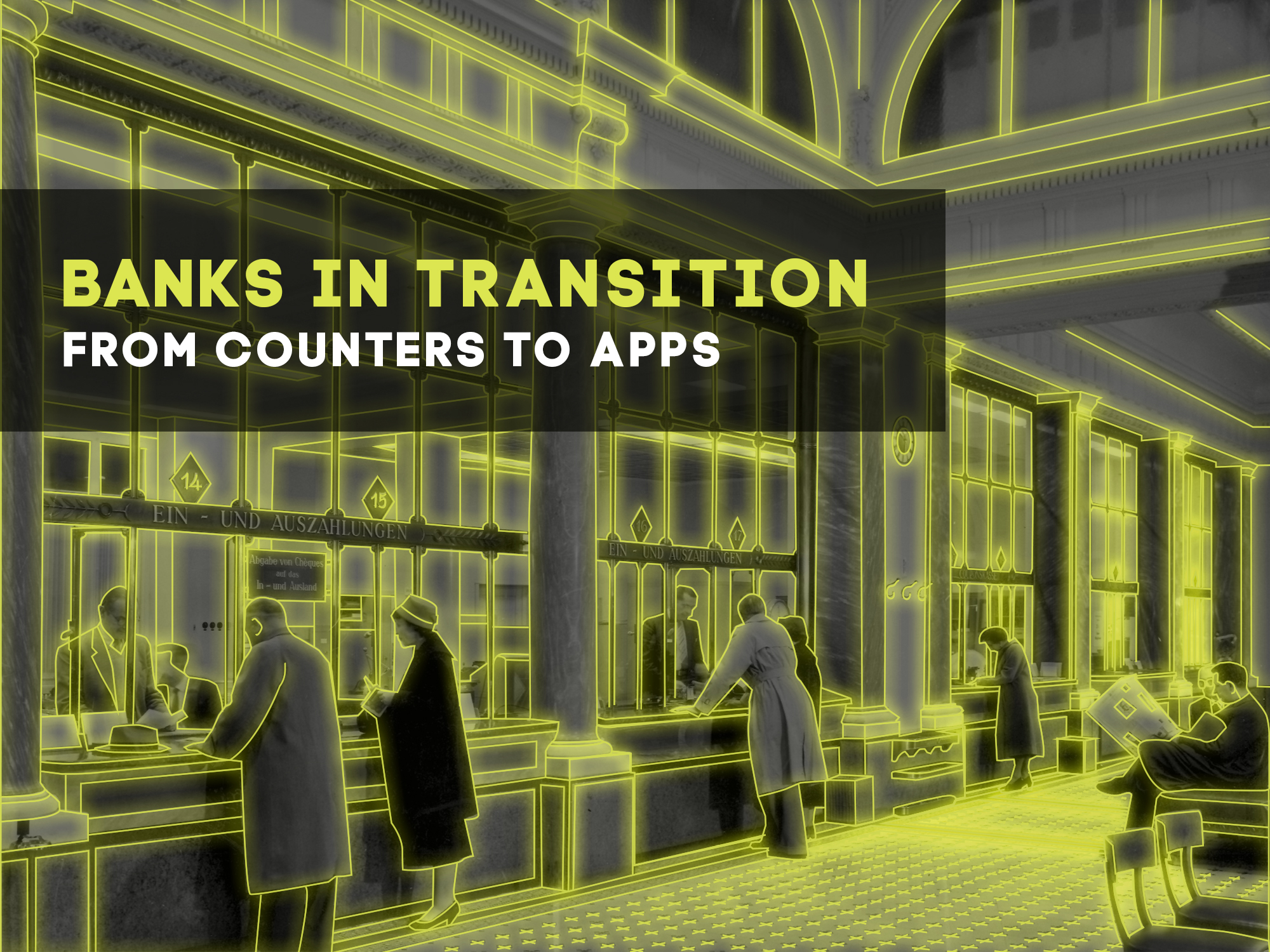
The exhibition shows the origins of the Swiss banking system up until the Swiss financial center takes shape, and contrasts them with the current, digital trends in banking: from counters to apps.
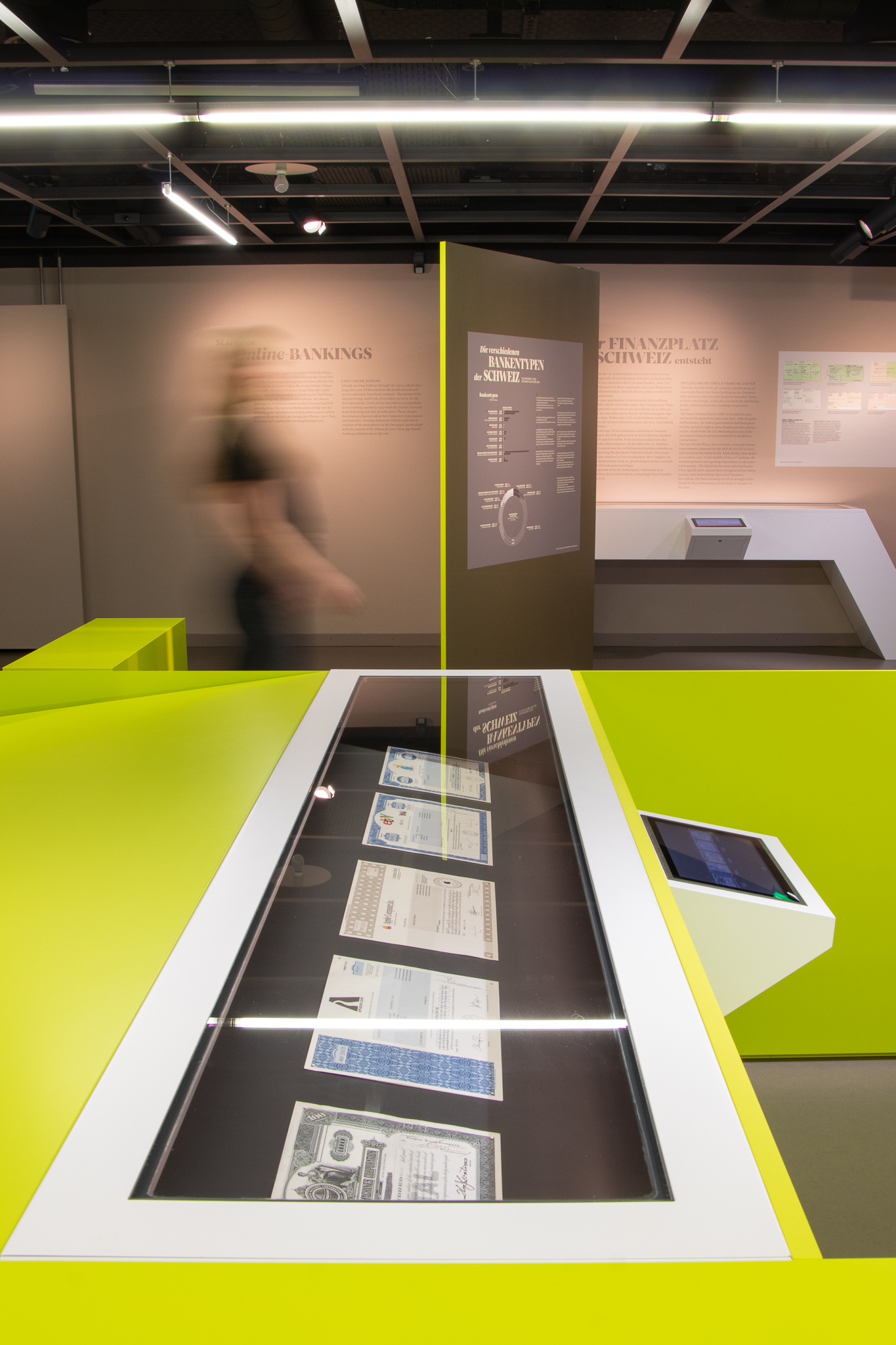
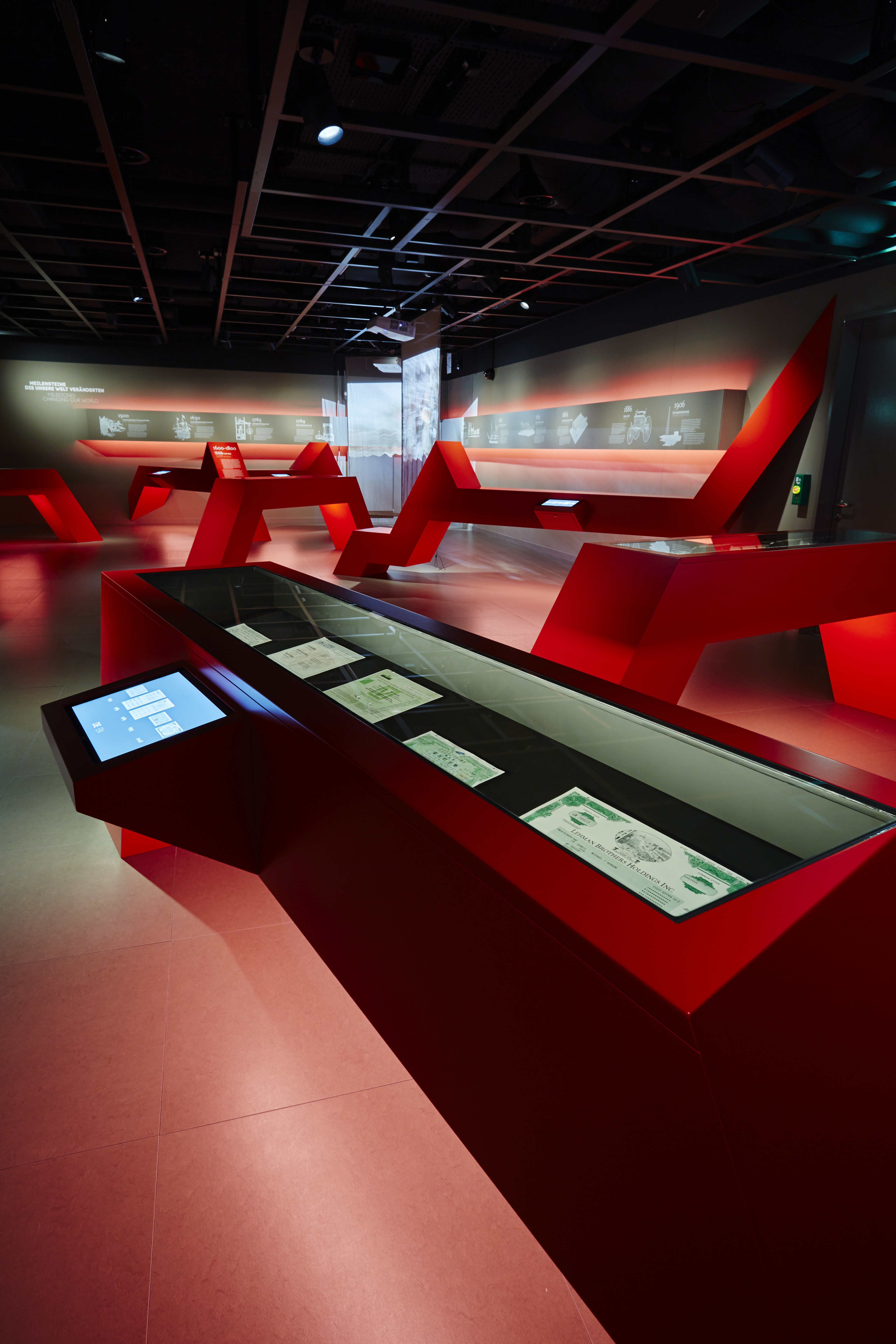
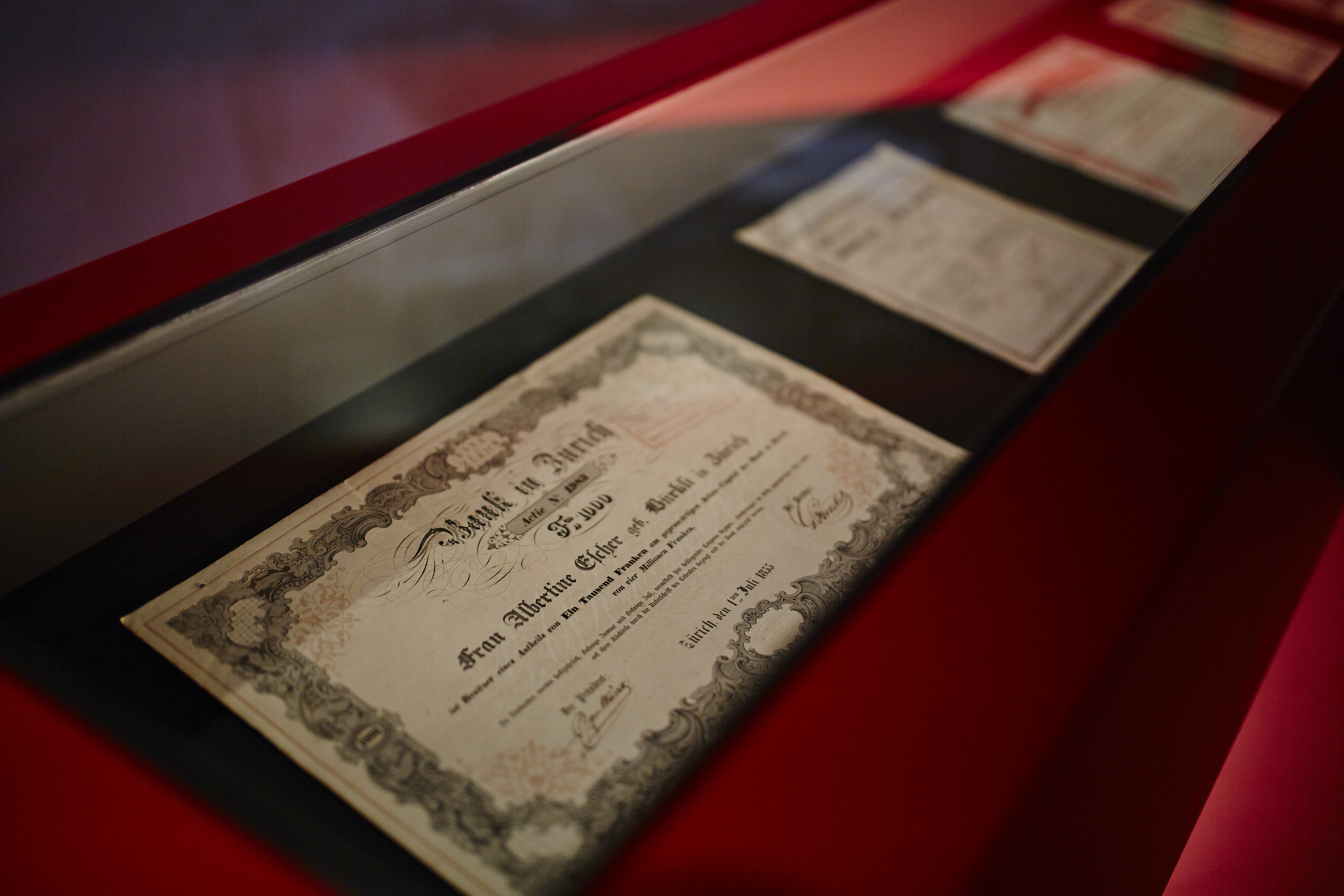
A selection of original historical securities will be used to showcase the types of Swiss banks, as well as global tech companies that are steadily driving digitization in the financial sector.
Exhibition content
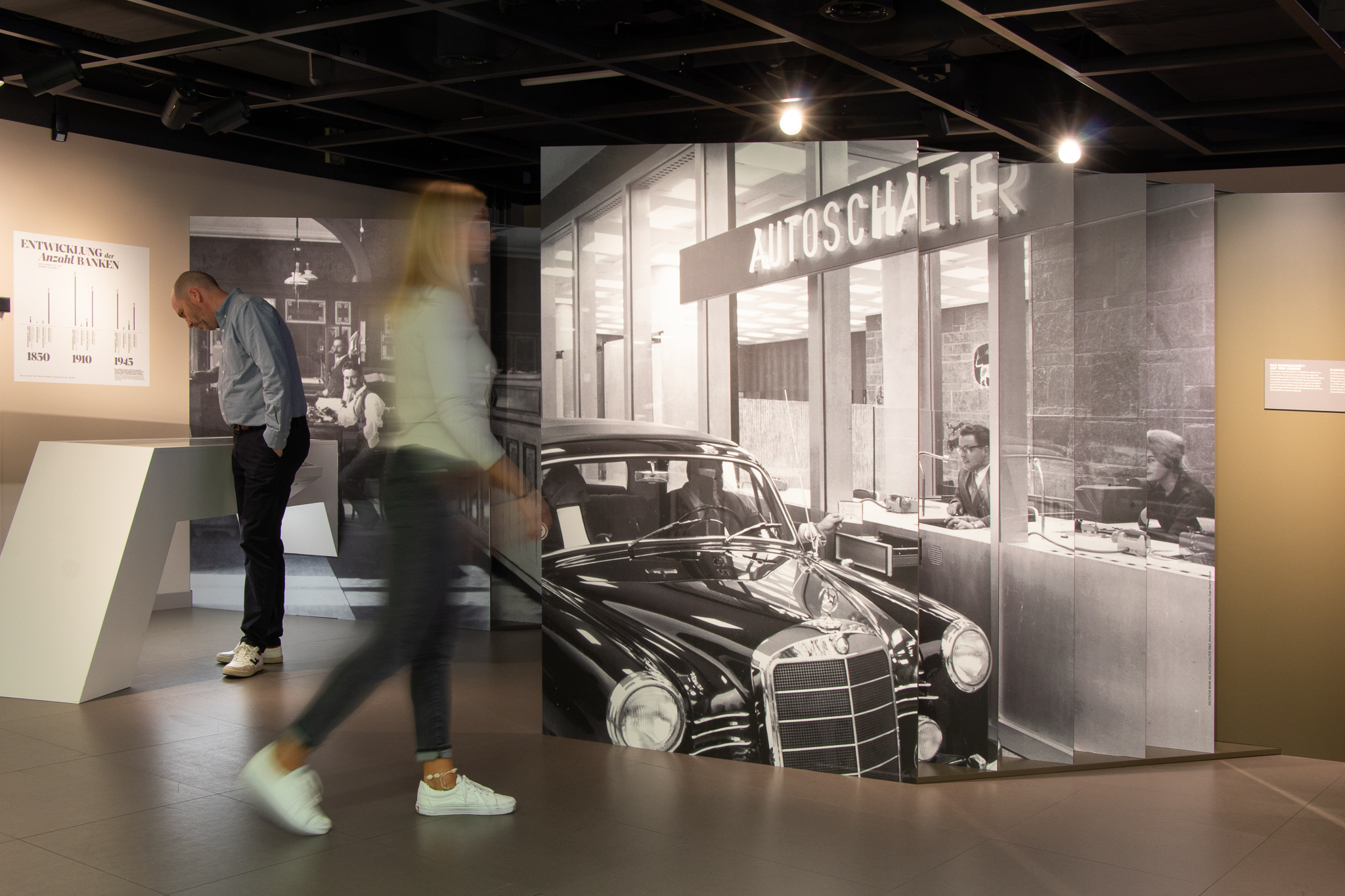
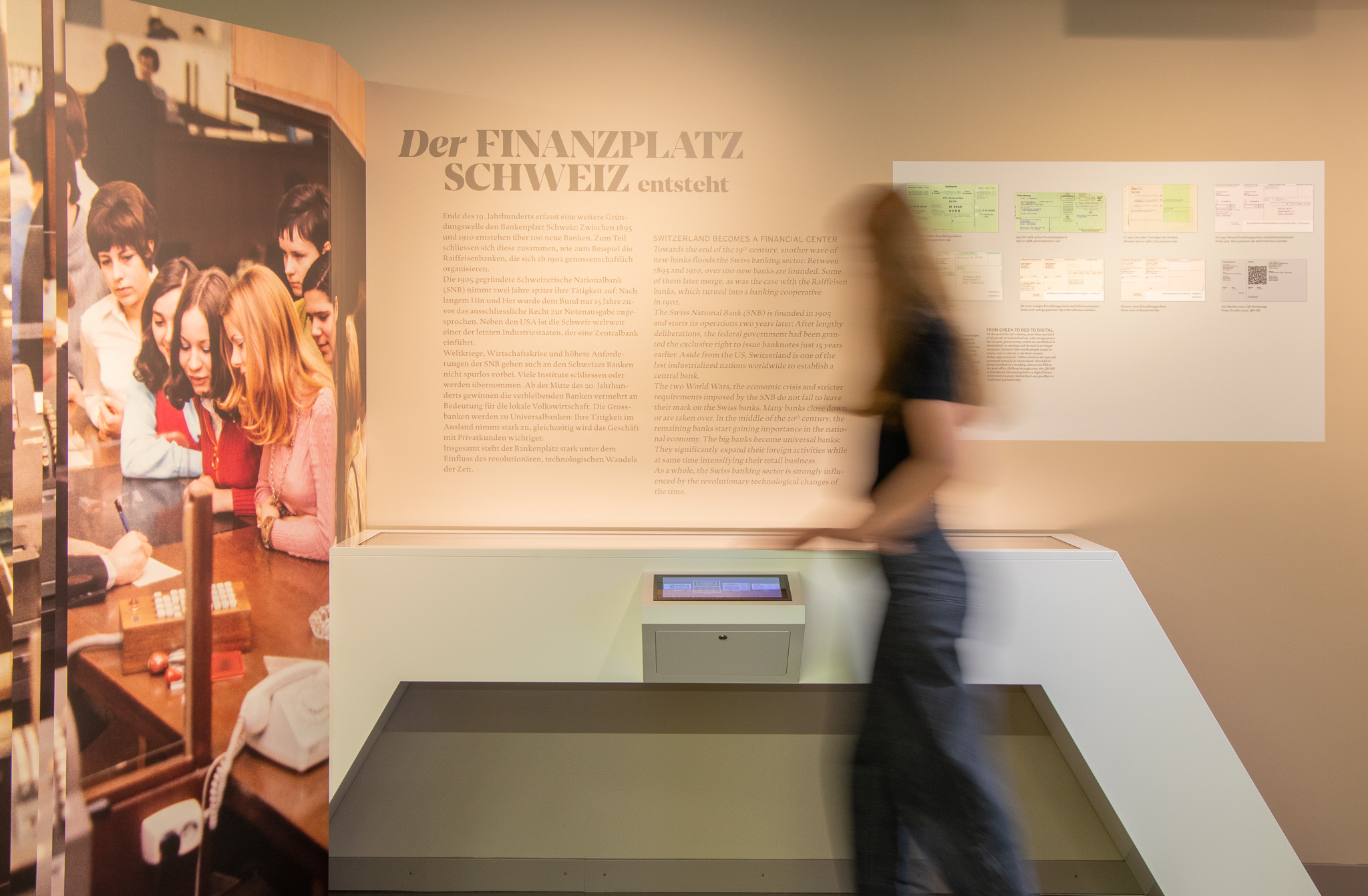
The aim of the exhibition "Banks in Transition: From the Counter to the App" is intended to show the transformation of the Swiss financial centre and the relationship between private clients and banks. Whereas personal contact in the branch used to be the main focus, banking has now moved to the smartphone, in an anonymised form.
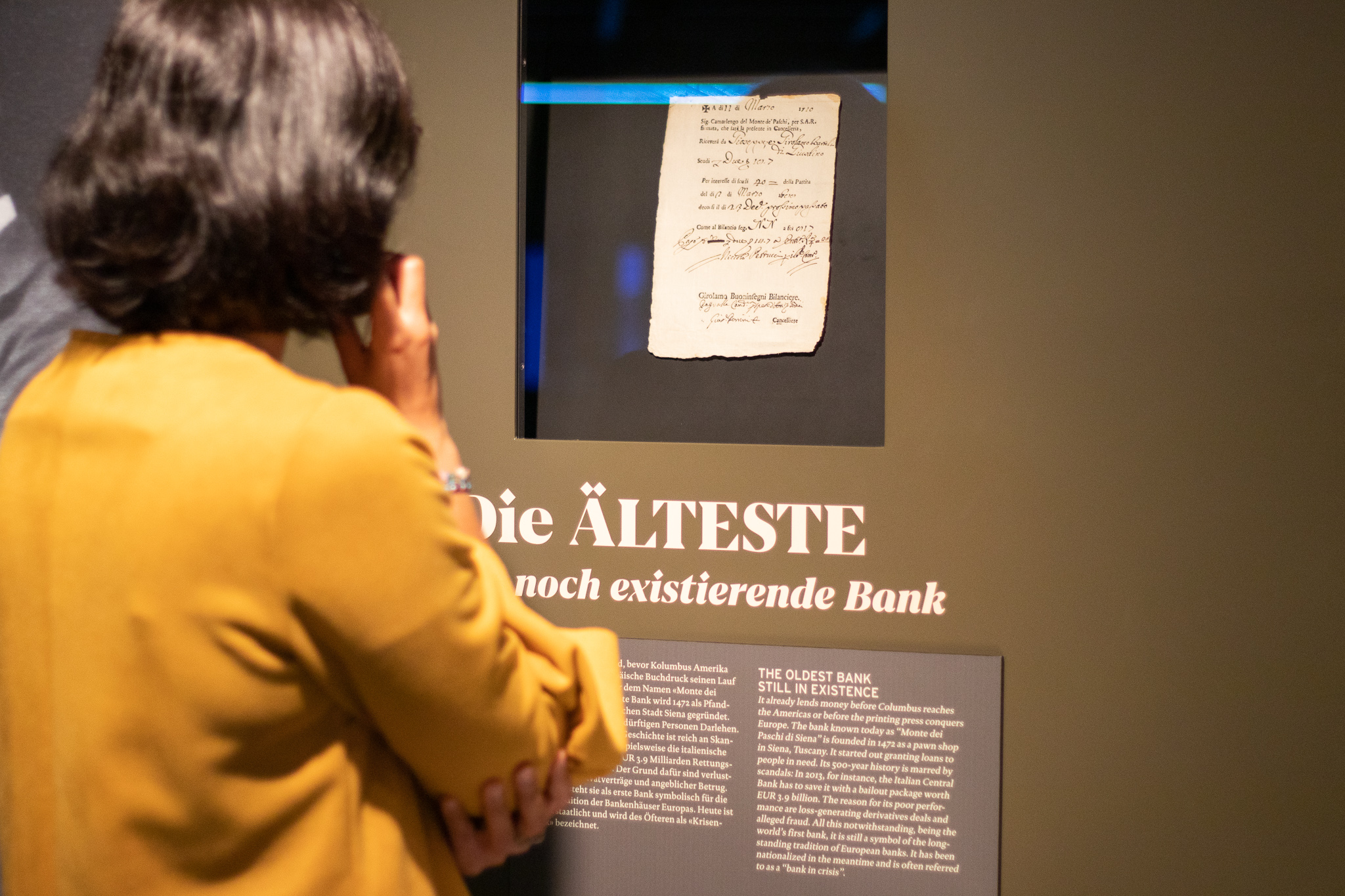
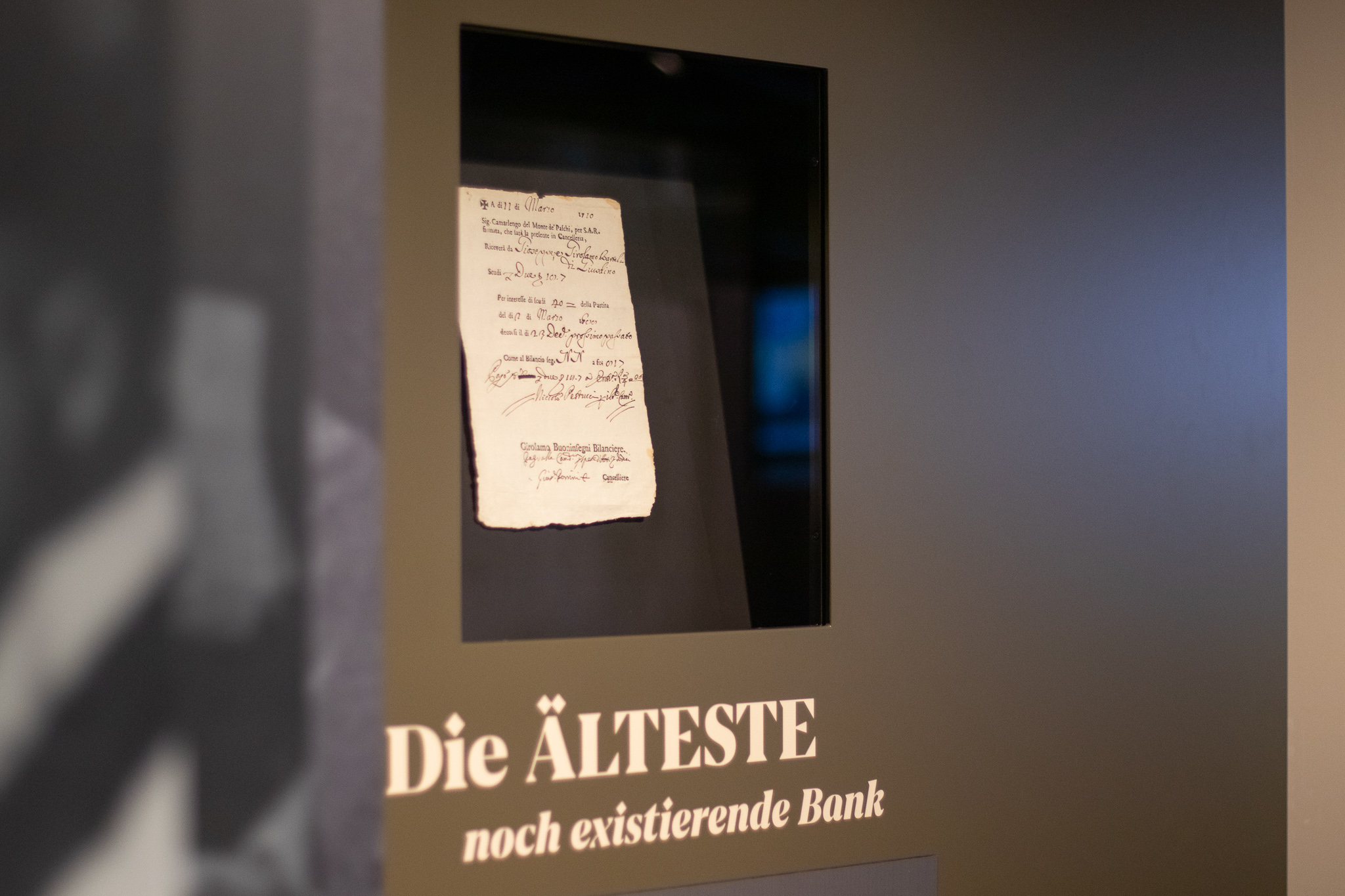
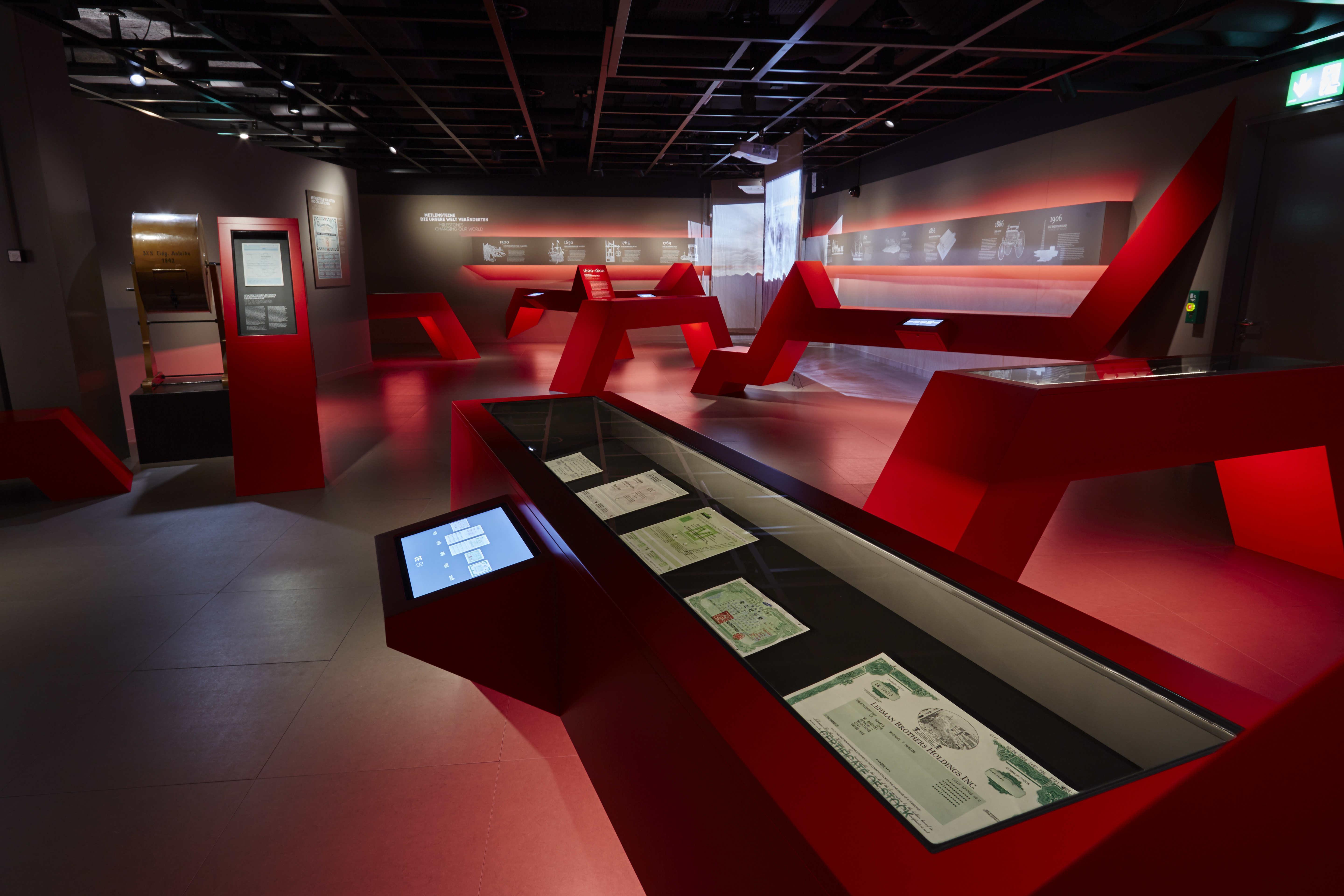
The exhibition's first section is devoted to history and shows the roots of Swiss banking: From the Middle Ages, when the first merchants became settled bankers, through the 16th and 17th centuries, when exchange offices fulfilled the first functions of a central bank and the first private banks were founded, Swiss banks then evolved in the 19th century into what would later become the Swiss financial centre. On display in this section are historical securities of Swiss banks as well as the oldest bank still in existence; the "Monte dei Paschi di Siena".
The emerging Swiss financial centre was characterised by a heterogeneous banking landscape – from the local savings bank to the private bank to the big bank; illustrations explain the different typologies and how they were weighted.
Since the advent of the internet, there has also been quite a bit of momentum in banking. This is shown in another part of the exhibition. For example, the tools that exist today only in digital form: In the past, deposits were made with physical payment slips and yellow receipt books at the Swiss Post Office, but today deposits have long since become an integral part of every e-banking service. The same applies to the "Spar-Buechli” – the booklet that certified the ownership to the holder of a bank account as well as all transactions has today been replaced by digital account statements.
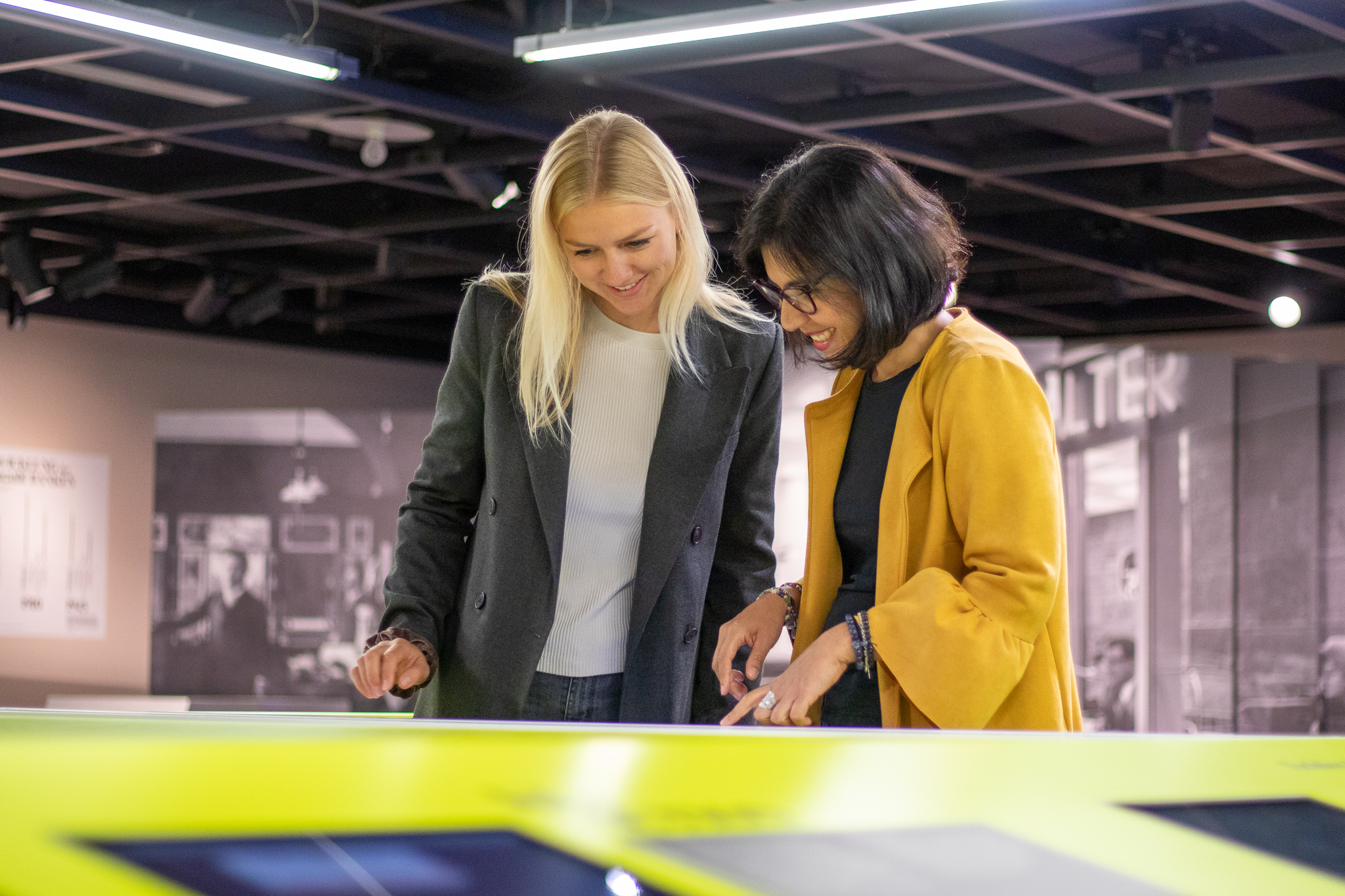
At the same time, the number of branches has been steadily decreasing ever since; banking is migrating first to the internet and then to the smartphone. In the final part of the exhibition, dedicated to the present day, visitors can find out what neobanks are, what role mobile phones and artificial intelligence play in banking. This exhibition area will be highly interactive in order to translate the advancing digitalisation into a haptic experience. As a highlight, two tablets are available on which visitors can get to know banking and retirement apps. A robo-advisor can be tested at an interactive station. Similarly, another display table explains new phenomena such as cryptocurrencies or NFTs and gives banking experts and a financial expert the floor. This part is complemented by securities of tech companies such as Amazon or Apple, which are trying to upend the financial sector.
Permanent exhibition
New with «COMPAGNIE DES INDES ORIENTALES»
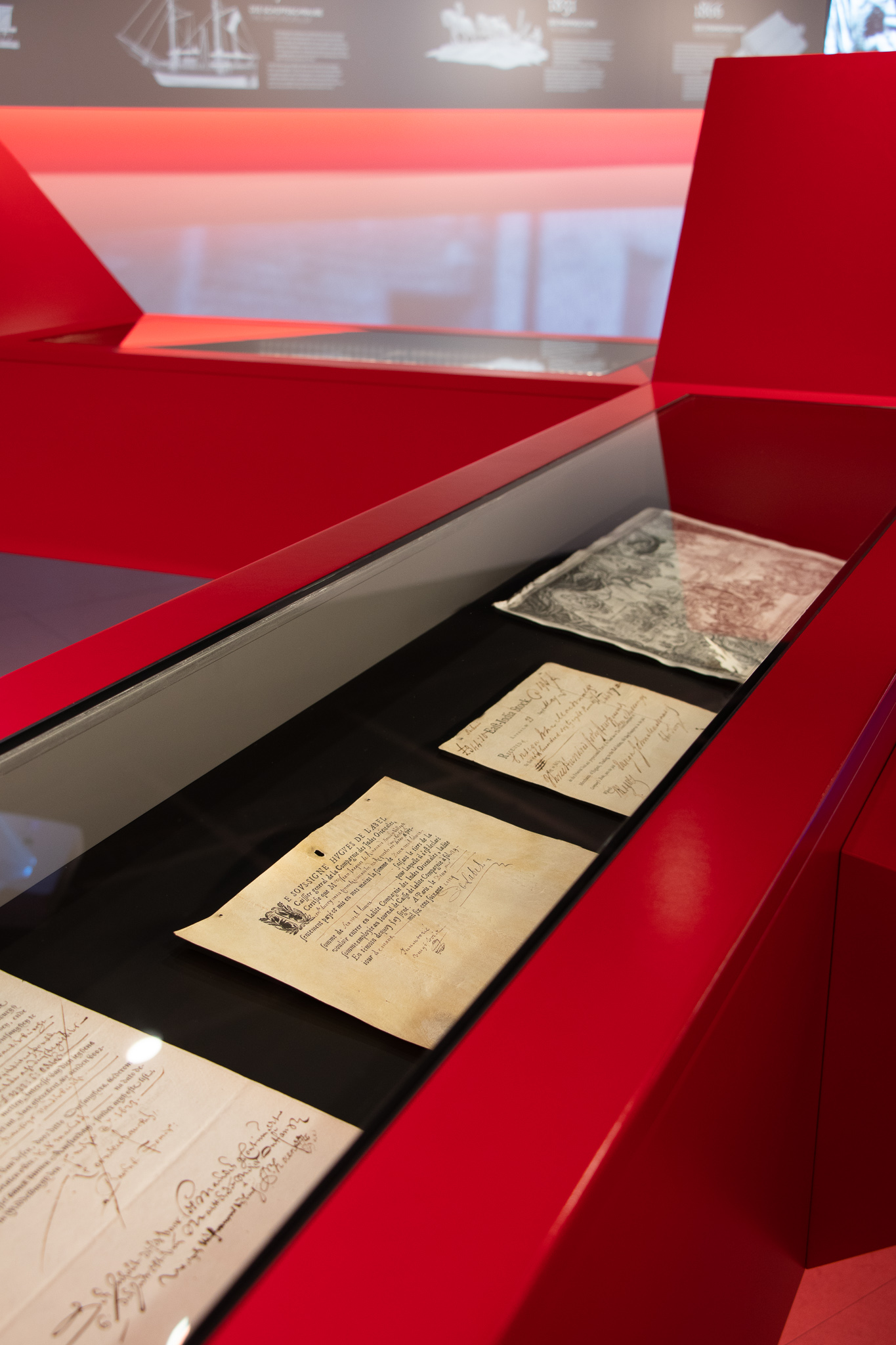
As of 25 August, the permanent exhibition will also feature the "Compagnie des Indes Orientales" - the French East India Company from 1665. It is the oldest known security in financial history that already shows all the characteristics of a share-certificate. This historical security is one of only three still in existence worldwide, and the only one on display in a museum.
Intro
The Swiss Finance Museum offers visitors a multimedia exhibition that illustrates not only the origins of our economic system, but also the great importance the financial market and its infrastructure have for our daily lives. The spotlight is on stock exchange trading, the capital market, financial instruments, payment transactions and technical objects, which demonstrate the financial industry's exemplary innovative strength.
The world's most distinguished collection of historical securities, made available by the "Stiftung Sammlung historischer Wertpapiere" (Foundation Collection of Historical Securities), is an integral part of the museum. From August 2022, the Finance Museum will be showing a new highlight featuring the French East India Company of 1665.
As the first and only finance museum in the banking country of Switzerland, the Zurich location has been the new reference site for the history and functioning of the financial industry and the Swiss financial centre since June 2017.
EXHIBITION CONTENT
Station 1 Audiovisual Show Finance Museum
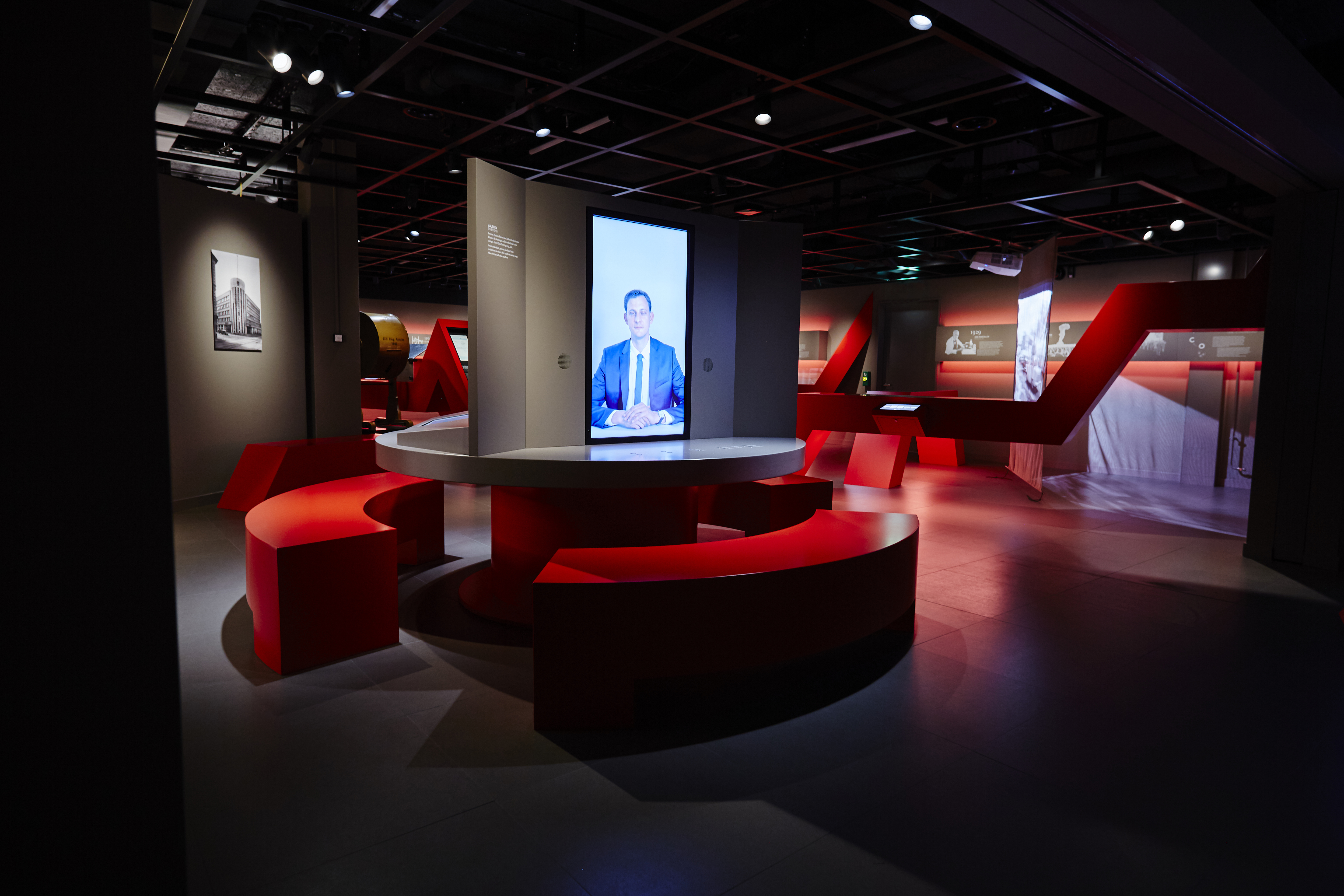
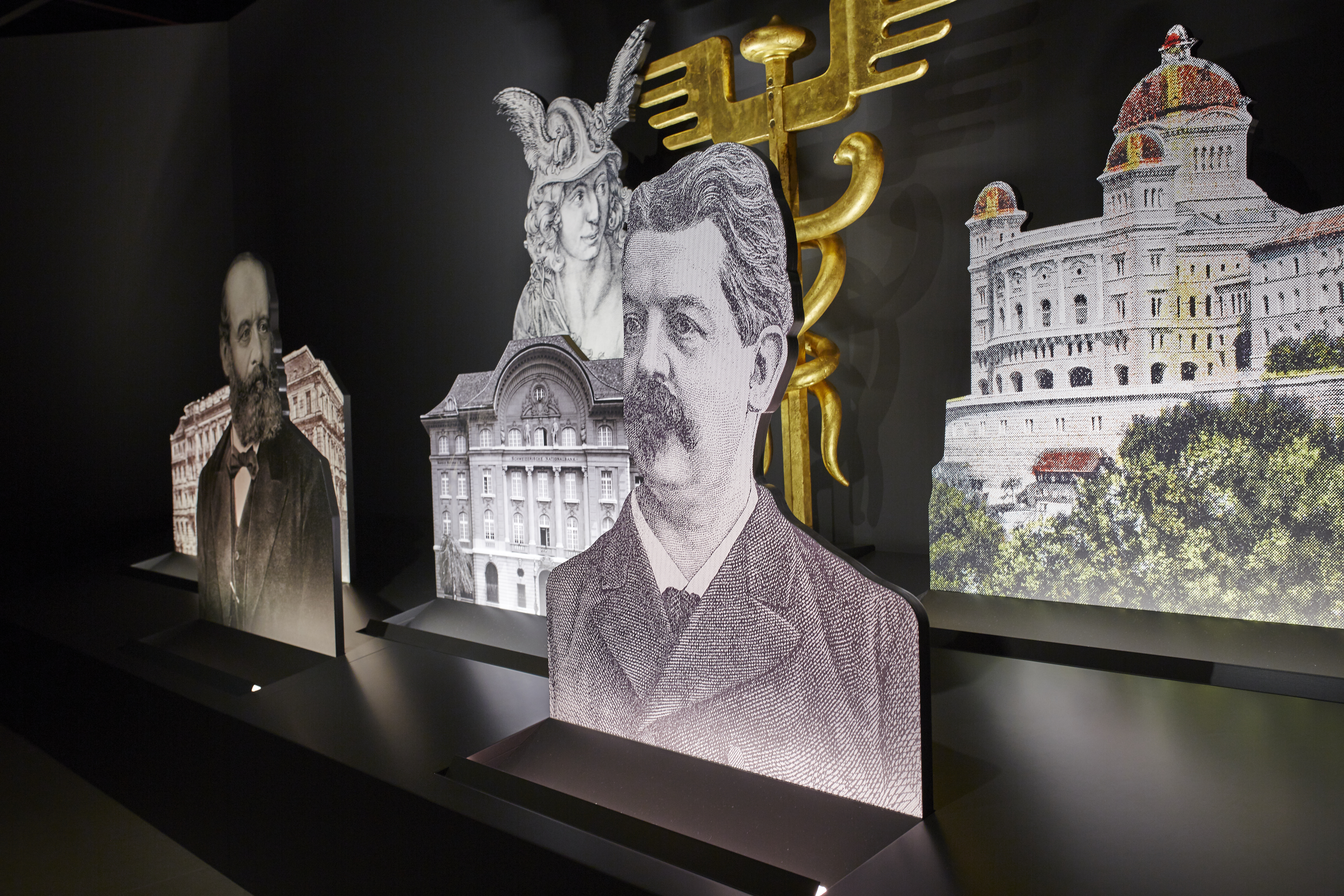
The exhibition begins with a fictional encounter between figures from history and myth: In an audio play, visitors can follow the conversation of two important figures in Swiss financial history. Robert Comtesse, initiator of the Swiss National Bank, talks to Alfred Escher, founder of today's CS.
Mercury, Roman god of merchants and thieves, moderates the conversation. The gentlemen look back at the milestones of modern financial history to the most recent developments in the financial industry. They explain the function, mission and economic relevance of the Swiss stock exchange, which is operated by SIX, and discuss the issues which are always being raised anew about the Swiss financial centre.
Station 2 Economic eras
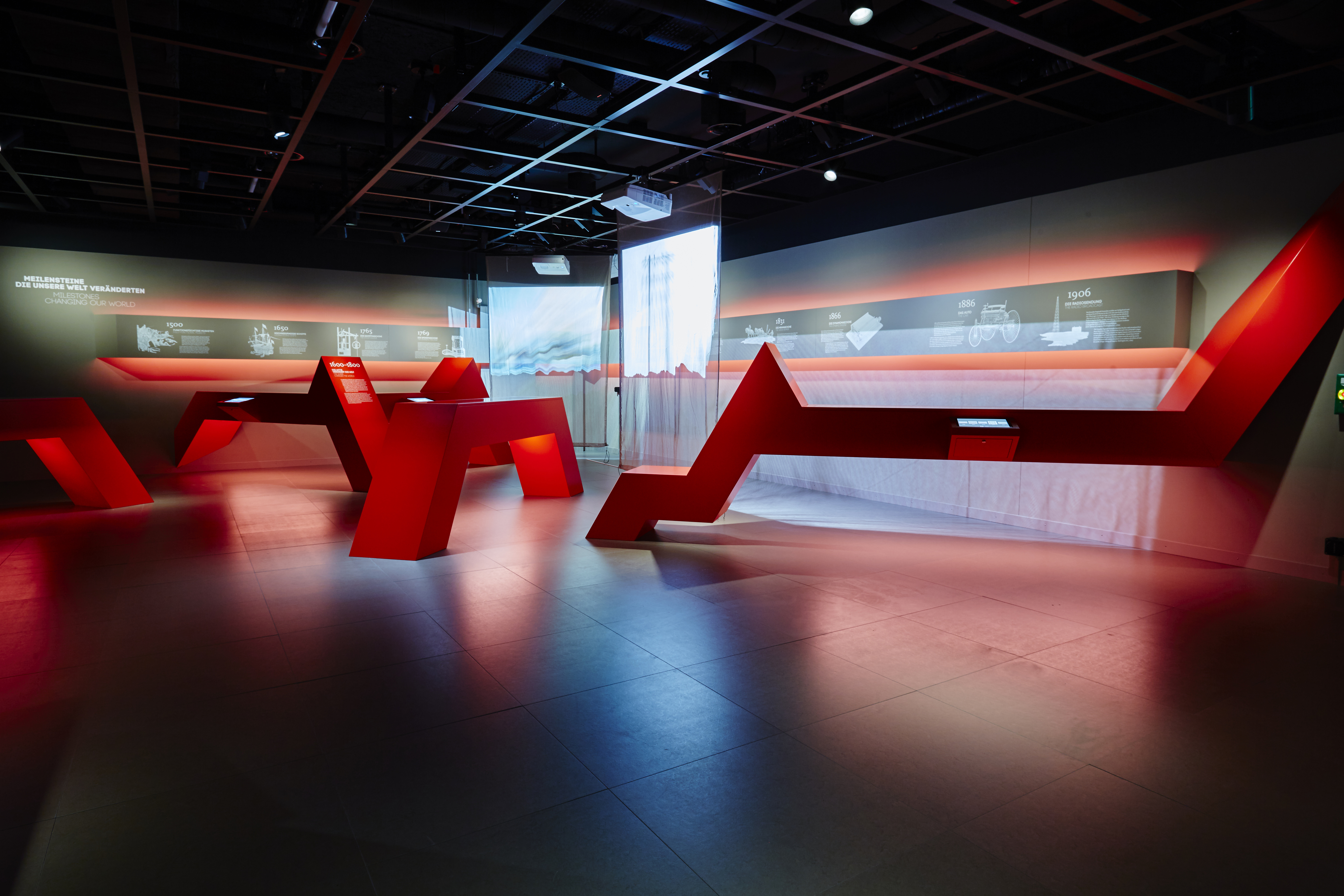
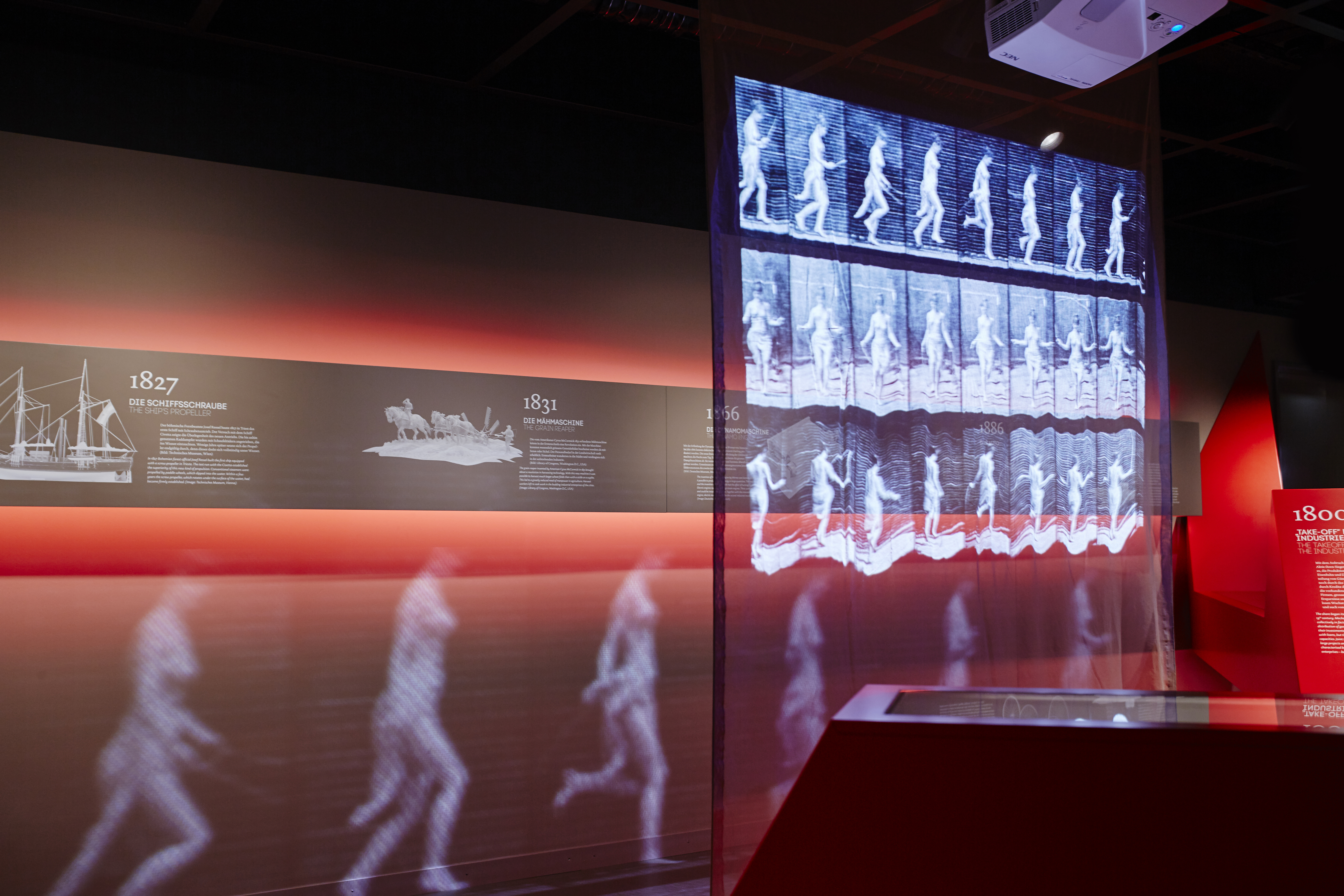
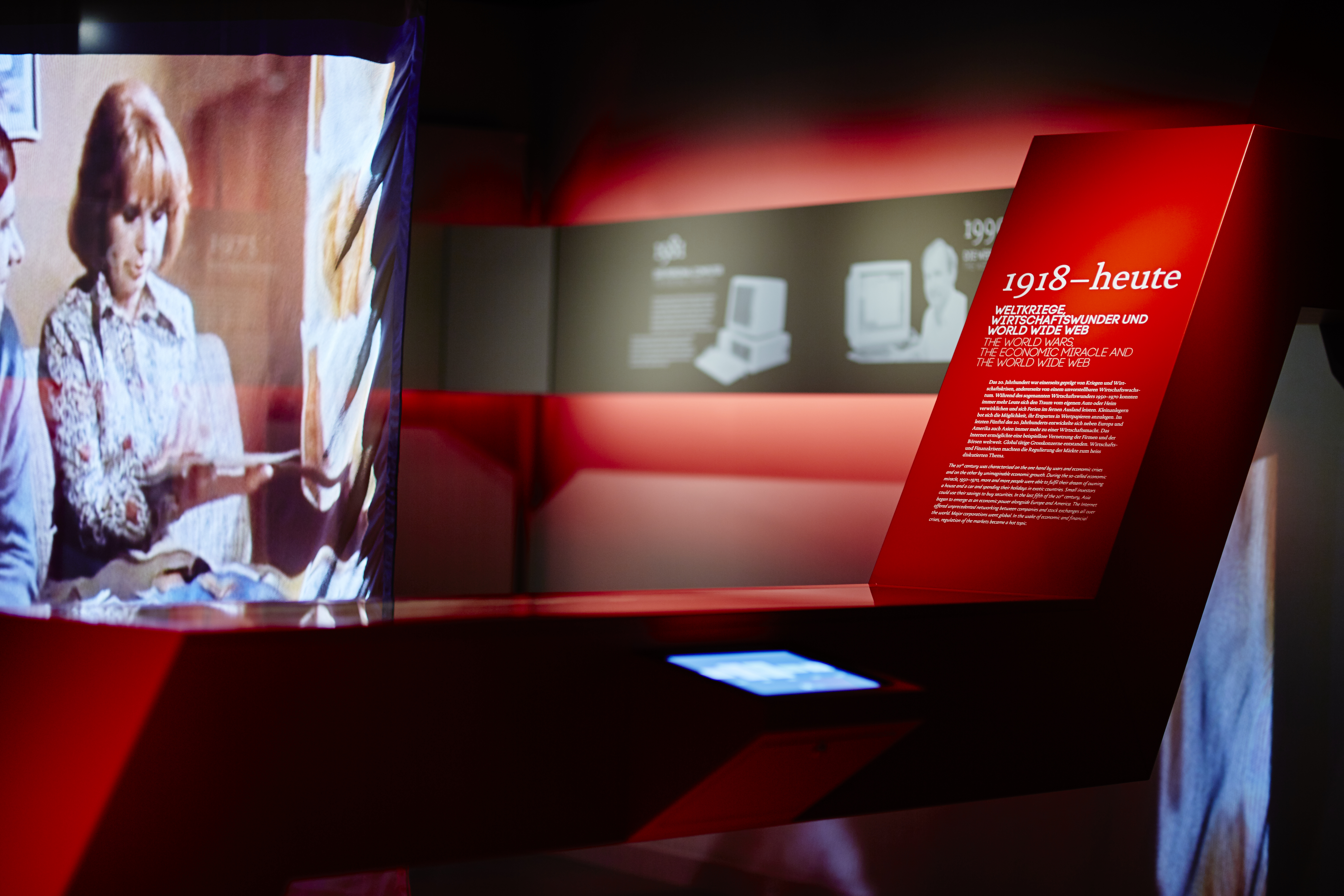
In the second part, the exhibition leads the visitor through the different periods of economic history from the 16th to the 21st century. This journey is illustrated with securities issued by famous companies from the world's most comprehensive and important collection of securities in terms of financial history. The dynamic and reciprocal relationships that existed between the financial sector and industrialisation clearly emerge. From August 2022, the Finance Museum will also exhibit the "Compagnie des Indes Orientales" - the French East India Company of 1665 - the oldest known security in financial history, which already has all the characteristics of a stock.
Station 3 Exhibits featuring shares
Traditional securities had to be produced in a forgery-proof manner, stored in a protected place and invalidated when they expired. At this station, tools, objects and security systems from the pre-digital era are made accessible, which have lost their purpose through the progressive dematerialisation of payment transactions.
Station 4 Trading desk
A cinematic production allows visitors to learn more about an essential process of the Swiss financial centre; the IPO. In a consultation, a banker explains to an entrepreneur the listing process for her company. However, before the company is listed on the Swiss Stock Exchange and authorised to issue shares, several conditions have to be fulfilled, which are explained by the banker.
Visitors are then invited at the touch of a button to ask a banker for information on key financial instruments such as shares, funds or gold.
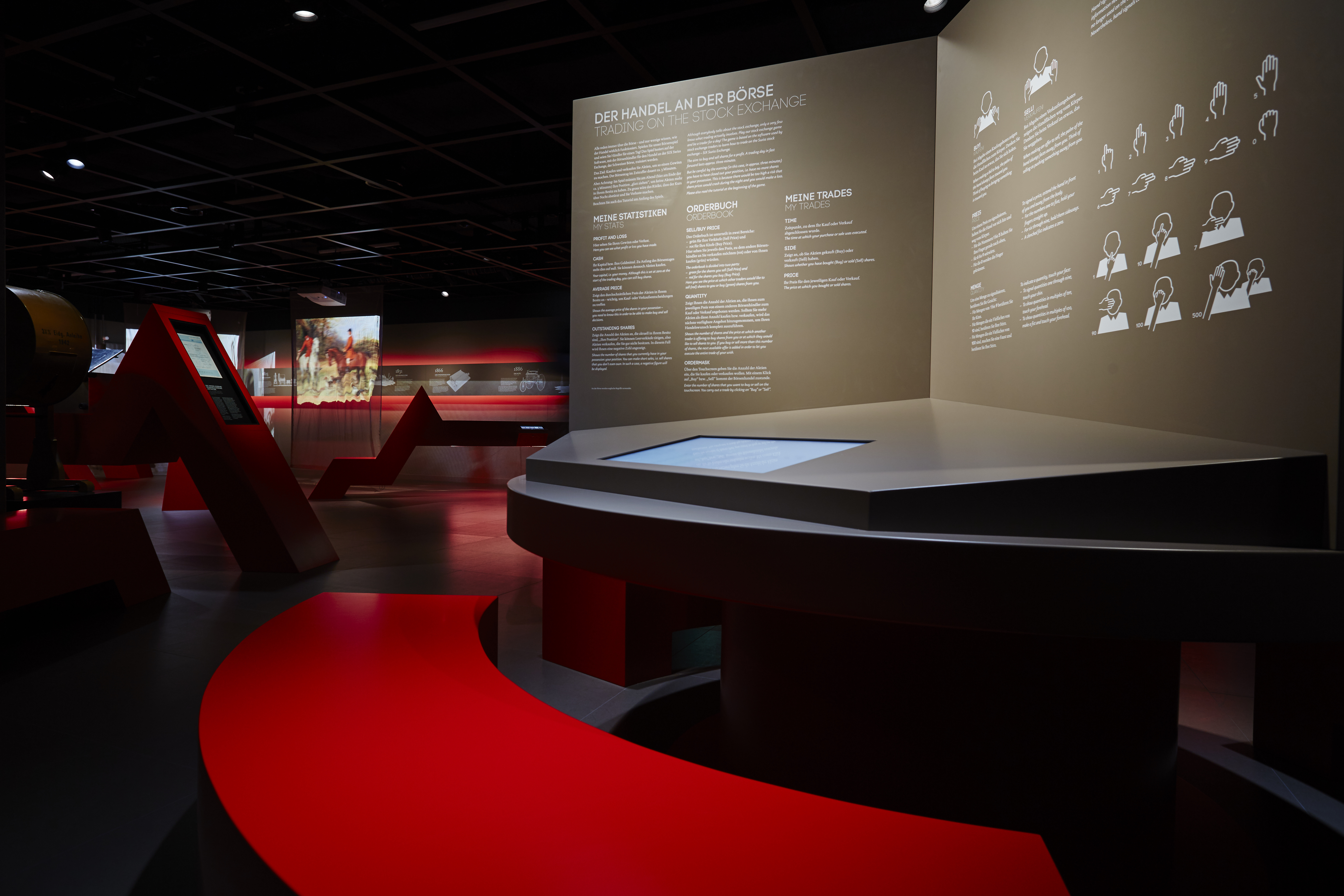
Visitors also have the opportunity to become active as equity traders themselves. They have access to a highly simplified version of the training programme used to train equity traders for their work on the Swiss Stock Exchange. The multimedia "stock exchange game" allows visitors to experience a whole day on the Swiss Stock Exchange within three minutes. You can buy and sell shares – but beware; a balance sheet is drawn up at the end of the day!
Station 5 Stock exchange wall
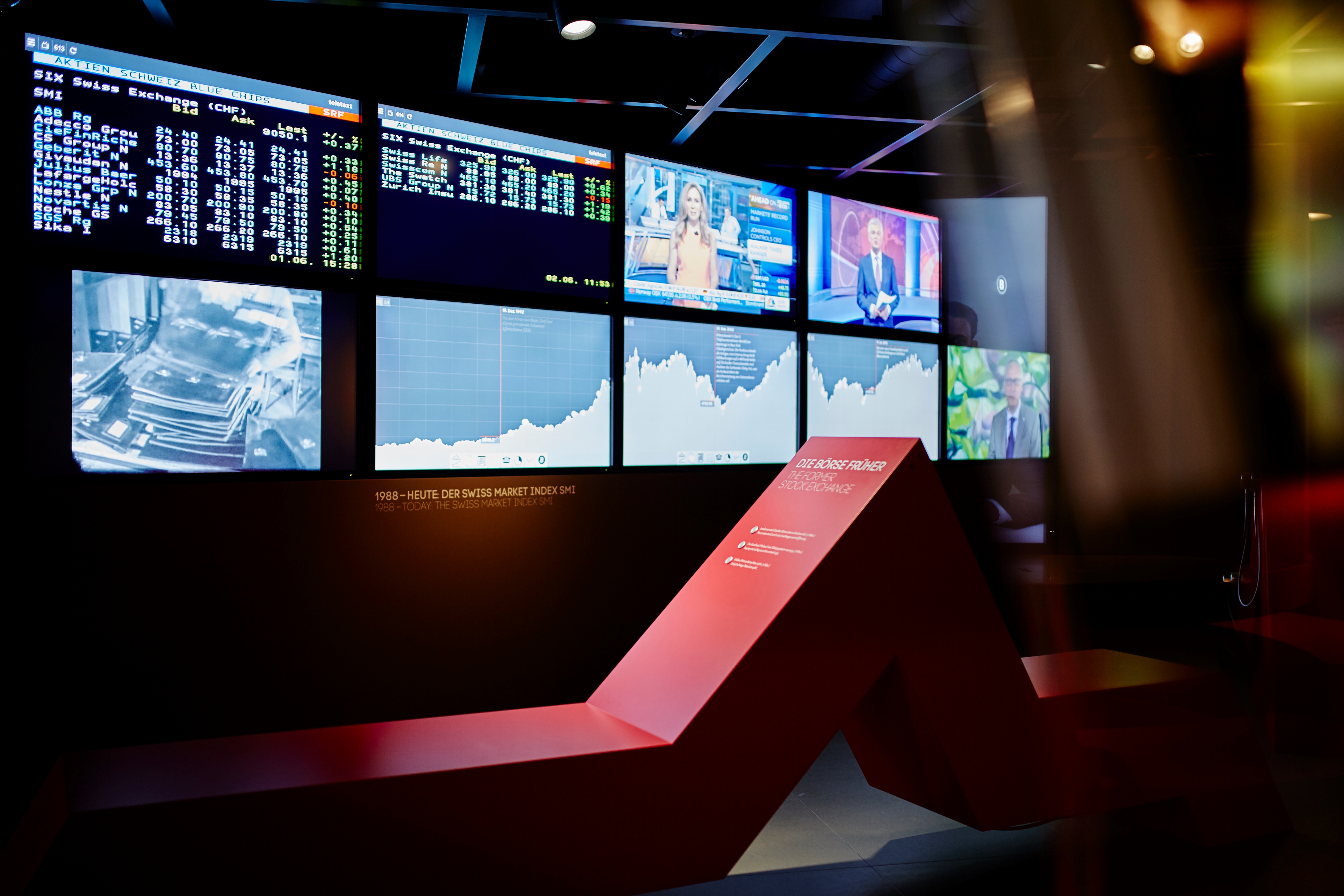
Various historical film clips at the “exchange wall” give visitors an impression of the pre-digital era, when securities were still traded dramatically in physical form involving face-to-face contact.
An interactive infographic also shows how national and global political events have influenced the Swiss Market Index (SMI) since it was first published in 1988.
In three short interviews, well-known personalities from the Swiss business community also provide an outlook on the future of the financial sector.
The Exchange Wall also highlights financial innovations such as high-frequency trading or financial technology (FinTech) and uses various illustrations to explain key functions such as information, regulation and control, Swiss Value Chain, which SIX performs on behalf of the Swiss Stock Exchange.
Current events on the Swiss Stock Exchange and the global financial markets can also be followed live via up-to-date price information on the SMI and its securities and stock exchange television.
Station 6 Payment transactions
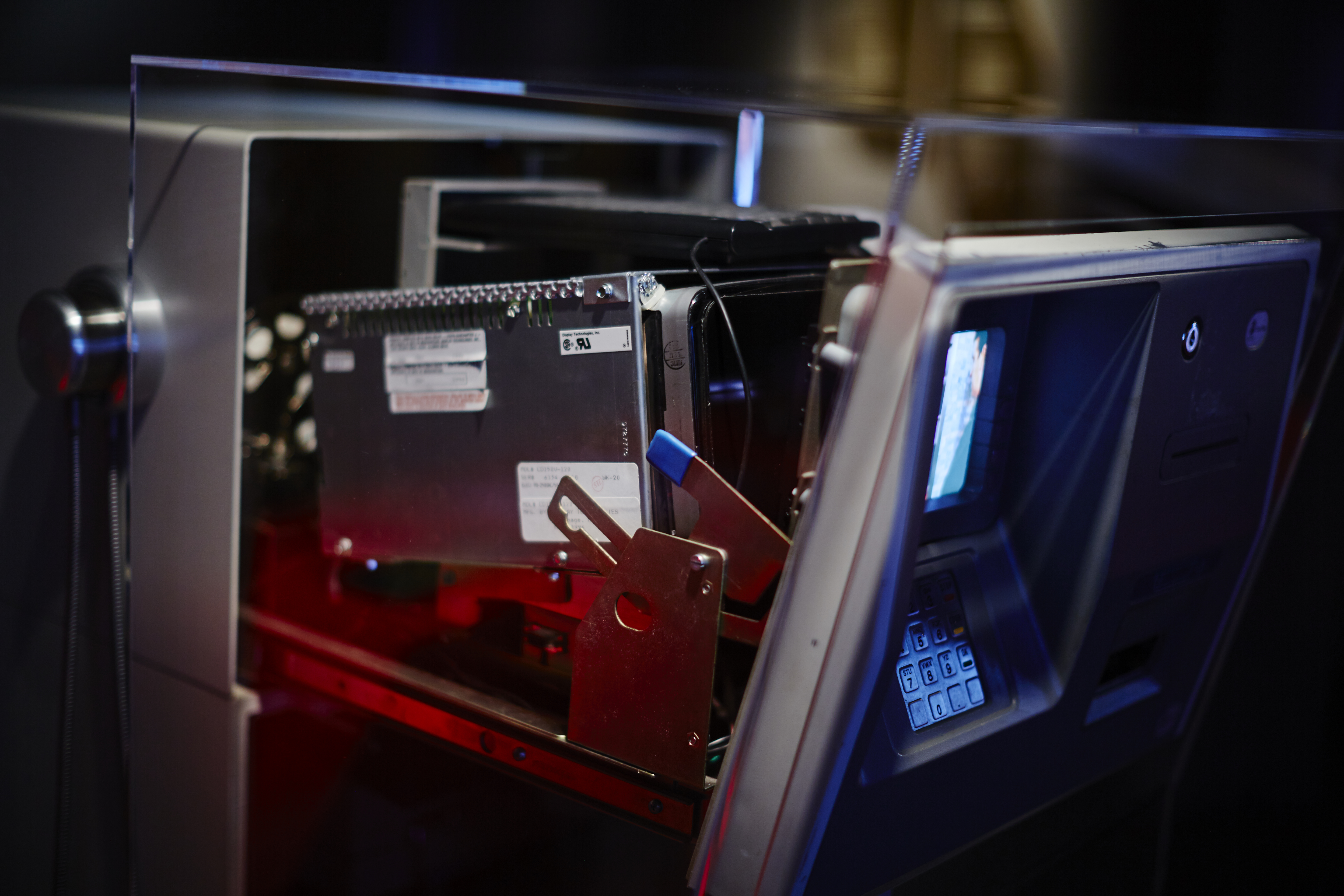
Here visitors can learn more about the origins of credit and debit cards, which revolutionised payment transactions starting in the middle of the 20th century. The history of ATMs and the latest technological possibilities, such as payment apps for smartphones, are presented as well as the role of Worldline's predecessor, SIX Payment Services, as the processor of electronic payment transactions in Switzerland, Austria and Luxembourg.